Is B2B Cold Calling Legal in the UK? PECR, TPS, CTPS and GDPR Explained (2026 Guide)
Last reviewed: 6 November 2026. This guide is general information, not legal advice. Check current ICO guidance, which was under review at the time of writing, before launching a campaign.
Key Takeaway
Yes, B2B cold calling is legal in the UK, but it is regulated. You may phone a business without prior consent, provided you have a lawful basis for processing the contact’s data (usually legitimate interests), you have screened the number against both the TPS and the CTPS, you have not been told to stop, you identify yourself, and you do not hide your number. Breaking the Privacy and Electronic Communications Regulations (PECR) can now cost up to £17.5 million or 4% of global turnover.
Is B2B Cold Calling Legal in the UK?
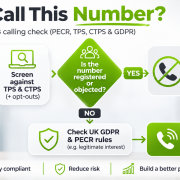
B2B cold calling is legal in the UK. PECR does not require prior consent for live marketing calls to businesses. What it requires is that you do not call numbers registered with the Telephone Preference Service (TPS) or the Corporate Telephone Preference Service (CTPS), that you honour anyone who has told you not to call, and that you follow basic transparency rules on the call itself. Where you hold a named individual’s details, UK GDPR also applies, and legitimate interests is the lawful basis most B2B callers rely on. These points follow the ICO’s business-to-business marketing guidance.
What Is PECR and Why Does It Apply to Business Calls?
PECR is the set of UK rules covering electronic marketing, including live phone calls. The ICO states that its rules apply to anyone who wants to make unsolicited live calls for direct marketing purposes. Importantly, the ICO treats the live call rules as applying equally to corporate subscribers and individual subscribers; the big difference between the two groups is on email, not on the phone. PECR sits alongside UK GDPR: PECR governs whether you may make the call, UK GDPR governs what you do with the personal data behind it.
What Is the Difference Between the TPS and the CTPS?
The TPS is the register for individuals, and the CTPS is the register for corporate subscribers. Which one a number sits on depends on the legal status of the organisation, which is why you must check both.
| Question | TPS | CTPS |
|---|---|---|
| Who is covered | Individuals, sole traders and some partnerships | Corporate subscribers: limited companies, LLPs, Scottish partnerships, some government bodies |
| Must you screen against it for B2B calls? | Yes | Yes |
| Cost to register a number | Free, per the ICO | Free, per the ICO |
| When a registration takes effect | After 28 days | After 28 days |
| What registration means | A general objection to live marketing calls | A general objection to live marketing calls |
The ICO is explicit: you need to screen against both the CTPS and TPS registers, as well as your own do not call list. A sole trader or a standard English partnership is an individual subscriber, so a B2B list full of small firms will contain TPS numbers as well as CTPS ones.
Do You Need Consent to Cold Call a Business?
No. Consent is not required for live marketing calls unless the number is on the TPS or CTPS, and even then a person or business can consent to receive your calls. The key point is that a TPS or CTPS registration is a general objection, so a registered number is off limits unless you hold valid, specific consent from that subscriber. Automated or pre-recorded marketing calls are different and need prior specific consent, so they are not part of a standard telemarketing campaign.
Can You Use Legitimate Interests for B2B Cold Calling?
Often, yes. The ICO says that where PECR does not require consent, legitimate interests is in many cases likely to be the appropriate lawful basis, though it stresses there is no absolute rule. You must pass the three-part test: a genuine purpose, a need to process the data for it, and a balance in which the individual’s rights do not override your interest. Document that assessment before the first call.
Two practical consequences follow. First, if you hold a named person’s number, you must give privacy information and respect the right to object. The ICO describes the right to object to direct marketing as absolute, so when someone says stop, you stop and record it. Second, a business as such does not have UK GDPR rights, but PECR still requires you to honour its CTPS registration and any objection it has made. You cannot call a number belonging to a business that has previously objected to your calls.
What Must You Do on the Call Itself?
The ICO sets out four duties for live marketing calls:
- Say who is calling, for example the name of your organisation.
- Do not withhold your number, and display your number or a valid alternative contact number.
- Give your organisation’s contact details or a Freephone number if asked.
- Stop when asked, and never call that number again for marketing.
What Are the Penalties for Breaking the Rules?
Penalties have risen sharply. Under the Data (Use and Access) Act 2025, the maximum fine for PECR breaches moved from £500,000 to £17.5 million or 4% of global annual turnover, in line with UK GDPR levels. Clifford Chance reports these changes as taking effect on 5 February 2026. Law firm commentary also records that the government considered extending PECR’s consent requirements to B2B marketing but did not implement that proposal, so B2B calling remains an opt-out model rather than opt-in.
The ICO has said the live calls guidance is under review following the Act, so treat any single published figure or rule as a snapshot and check the ICO site before each campaign.
How Often Should You Screen Your Data Against the TPS and CTPS?
The ICO requires you to check numbers against the registers before you make the calls, but its pages do not set a re-screening interval. Because registrations take 28 days to take effect, many UK data providers apply a 28 day maximum screening interval as good practice. That figure is an industry convention, not a statutory limit. Our advice is simple: screen immediately before a campaign starts, log the screening date, and re-screen any list that has sat unused for a month or more.
Screening only works on accurate records. A disconnected or wrongly attributed number means a wrong screening result, which is why we pair compliance checks with B2B data cleansing and our GDPR data service.
Pre-Campaign B2B Cold Calling Compliance Checklist
- Record your lawful basis. Complete and file a legitimate interests assessment.
- Document data provenance. Know where each number came from and when it was collected.
- Clean the list. Remove duplicates, dead numbers and anyone who has previously objected.
- Screen against both registers. Check the TPS and the CTPS, plus your own do not call list.
- Log the screening date. Keep an audit trail for every campaign.
- Brief callers. Name the organisation, show a real number and offer contact details on request.
- Capture objections immediately. Suppress the number the same day and keep the record.
- Publish privacy information. Make it easy for named contacts to see how their data is used.
What Does Compliant Cold Calling Look Like in Practice?
Compliant calling is mostly process. A good agency agrees the target audience and lawful basis with you, builds and cleans the list, screens it, trains callers to qualify politely and exit gracefully, and keeps a suppression list that survives from campaign to campaign. Done well, compliance also improves results: screened, accurate lists mean fewer wasted dials and fewer complaints.
How Prospect Solutions Can Help
Prospect Solutions is an ICO registered B2B telemarketing specialist. We screen data against the TPS and CTPS, run campaigns against your agreed qualification criteria, and hand over only conversations your sales team wants. Explore our B2B appointment setting service and B2B lead generation service, or talk to our team about a compliant outbound programme for your market.
Frequently Asked Questions
Is B2B cold calling legal in the UK?
Yes. You do not need prior consent to phone a business, but you must screen against the TPS and CTPS, honour objections, identify yourself and show your number.
Do I need to check the CTPS before cold calling a limited company?
Yes. The CTPS covers corporate subscribers such as limited companies. The ICO says to screen against both the CTPS and the TPS.
Can I cold call sole traders?
Yes, but sole traders are treated as individual subscribers, so you must check their numbers against the TPS before calling.
Is cold calling covered by GDPR?
Where you hold a named individual’s details, UK GDPR applies alongside PECR. Most B2B callers rely on legitimate interests and must honour the right to object.
How long does a TPS or CTPS registration take to work?
A number must be on the register for 28 days before the registration takes effect, and registering a number is free, according to the ICO.
What is the maximum fine for breaching PECR?
Up to £17.5 million or 4% of global annual turnover under the Data (Use and Access) Act 2025, up from £500,000 previously.
Can I call a business that has asked me to stop?
No. The ICO says you cannot call the number of a business that has previously objected to your calls.