B2B Cold Calling Script for IT and Tech Sales: A Free Template That Gets Senior Decision-Makers Talking (2026)

The short answer

A B2B cold calling script for IT sales works best as a six-stage conversation framework, not a speech. State your name and a clear reason for calling, link it to a problem the prospect’s role owns, ask two or three discovery questions, handle the most likely objection, then ask for one specific next step. With senior IT buyers, the goal of the first call is a booked follow-up, not a sale.

Below you will find the framework, a complete copy-and-adapt script for calling an IT Director, a gatekeeper script, an objection bank, a voicemail and follow-up email, and the benchmarks you should measure yourself against. Everything here comes from how the Prospect Solutions team calls into technology buyers every day: our business development managers each have between 10 and 30 years of experience generating qualified B2B leads.

What is a B2B cold calling script?

A B2B cold calling script is a prepared structure that guides an outbound sales call to a business contact who has not asked to hear from you. In practice there are three kinds:

  • Word-for-word script: every line written out and read aloud. Easy to train, but it sounds rehearsed and collapses the moment the prospect goes off-piste.
  • Talk track: key phrases and questions for each stage, with the caller filling in the rest naturally.
  • Conversation framework: a fixed sequence of stages with example lines, research prompts and objection responses. This is what we recommend for IT and technology sales.
ApproachBest forWeakness with senior IT buyers 
Word-for-word scriptBrand-new callers, simple offers, high volumeSounds generic; CIOs and IT Directors hang up within seconds
Talk trackExperienced SDRs with a single productCan drift without a clear objective for the call
Conversation frameworkComplex technical propositions, senior decision-makersNeeds product knowledge and call preparation

Why do most cold calling scripts fail with IT decision-makers?

Senior technology buyers are some of the most over-contacted people in UK business. Most scripts fail them for four predictable reasons:

  1. They pitch features too early. An IT Director does not care about your dashboard until you have shown you understand the problem they are accountable for, such as uptime, security risk, licence costs or a migration deadline.
  2. They open with a weak question. Gong Labs’ analysis of hundreds of millions of recorded calls found that opening with “Did I catch you at a bad time?” made a meeting about 40% less likely than the baseline, while simply stating the reason for the call roughly doubled success rates (Gong).
  3. They try to close a C-level contact on the spot. Belkins’ 2026 study of 175,000+ dials found that C-level prospects produced the highest rate of positive outcomes, but those outcomes were follow-up requests rather than meetings booked live on the call. Directors booked the most actual meetings (Belkins).
  4. They are read, not spoken. Technical buyers ask technical questions. A caller who cannot leave the page loses credibility immediately.

At Prospect Solutions, we see the same pattern when clients come to us after a previous agency or an in-house SDR push has stalled: the script was built for volume, not for a conversation with someone who signs off six-figure infrastructure decisions.

The 6-stage cold call framework for IT and tech sales

StageGoalTime on callWhat good sounds like 
1. ResearchKnow why this person, this weekBefore you dial (2 to 3 minutes)One specific trigger you can reference
2. OpenerEarn the next 30 seconds0 to 15 secondsName, company, clear reason for calling
3. Relevance hookShow you understand their world15 to 45 secondsA peer example or a problem their role owns
4. DiscoveryFind real pain and context45 seconds to 3 minutesTwo or three open questions, then listen
5. ObjectionKeep the conversation openAs neededAcknowledge, ask a question, reframe
6. Next stepBook something specificFinal 30 secondsA date, a time and an attendee list

Stage 1: Research before you dial

Spend two to three minutes finding one reason this call is relevant now. For IT buyers the best triggers are:

  • A new CIO, CTO or IT Director in post (new leaders review suppliers in their first 6 to 12 months)
  • A job advert for a cloud, security or infrastructure role
  • An acquisition, office move or expansion
  • A contract renewal date captured on a previous call
  • A compliance deadline in their sector

Write the trigger at the top of your call notes. If you cannot find one, use a peer reference from the same sector instead.

Stage 2: The opener

Keep it short, honest and specific. Gong’s opener research found that permission-based openers (acknowledging that this is a cold call) and openers that reference whether the prospect has heard of you both performed far above the average (Gong).

“Hi Sarah, it’s James from [Company]. I’ll be upfront, this is a cold call. The reason I’m ringing is that we’ve been helping IT teams in [sector] cut the time they spend on [specific problem]. Can I take 30 seconds to explain why I thought of you, and you can tell me if it’s worth carrying on?”

Stage 3: The relevance hook

Connect your reason for calling to something the prospect is measured on. Use a peer example rather than a claim.

“We recently worked with a [type of company] of a similar size whose IT team was stretched by [problem]. The IT Director’s main concern was [outcome, for example audit readiness before renewal]. I noticed you’ve just advertised for a [role], so I wondered whether that’s on your radar too.”

Stage 4: Discovery questions

Ask two or three open questions, then stop talking. Good discovery questions for technology buyers include:

  • “How are you handling [problem] at the moment?”
  • “What would need to change for that to become a priority this financial year?”
  • “Who else would be involved if you were to look at alternatives?”
  • “When does your current agreement come up for review?”

The last two answers are pure gold for qualification. They tell you whether you have a real opportunity, a future one, or neither. Our guide to MQL vs SQL vs SQO explains why that distinction matters more than the number of meetings booked.

Stage 5: Handle the objection

Most objections on a first call are reflexes, not decisions. Use a three-step pattern: acknowledge, ask, reframe. (See the full objection bank below.)

Stage 6: Close for a specific next step

Do not ask “Would you be interested in learning more?” Ask for something concrete.

“Based on what you’ve said about [their words], it sounds worth a 20-minute conversation with our technical lead, who can show you how [peer company] approached it. Would Tuesday at 10am or Thursday at 2pm work better? And should anyone from your infrastructure team join?”

B2B cold calling script template: calling an IT Director

Here is a complete example for a fictional managed security provider calling an IT Director at a 250-person professional services firm. Adapt the bracketed parts to your proposition.

Caller: “Hi Mark, it’s Emma from [Company]. I’ll be honest, this is a cold call, so I’ll be quick. The reason I’m calling is that we help mid-sized professional services firms reduce the security alert load on small IT teams. I saw you’re recruiting for a security analyst, which is often a sign the team is stretched. Is that a fair read?”

Prospect: “We’re busy, yes. But we already have a security provider.”

Caller: “That makes sense, most firms your size do. I’m not calling to suggest you rip anything out. Out of interest, when you look at the alerts coming through now, how much of that is your team triaging internally versus your provider handling end to end?”

Prospect: “Honestly, more than I’d like is landing on us.”

Caller: “That’s the most common thing we hear. One of our clients, a similar-sized firm, had the same issue and was spending around two days a week on triage before they changed their set-up. When does your current agreement come up for review?”

Prospect: “Around next September.”

Caller: “That’s useful timing, because most teams like to compare options six to nine months ahead. Would it be worth a 20-minute call with our technical lead to look at how you could take some of that load off, so you have a benchmark ready for the review? I can do Wednesday the 3rd at 11 or Thursday the 4th at 3.”

Prospect: “Thursday works. Send me something beforehand.”

Caller: “Will do. I’ll send a short agenda and one page on the client example today. Is there anyone else, perhaps your new analyst once they start, who should be on the call?”

What to log afterwards: incumbent supplier, renewal date (September), pain (alert triage load), stakeholders, agreed next step. This market intelligence is often as valuable as the meeting itself.

How do you get past the gatekeeper?

Treat receptionists and PAs as allies, not obstacles. Be polite, specific and brief.

“Hi, it’s Emma from [Company]. I’m hoping to speak to Mark about how the IT team handles security alerts. Is he the right person for that, or would it be someone else in the team?”

If you are asked “What is it regarding?”, give the same plain answer. If you are told he is unavailable, ask: “When is he usually easiest to reach?” and “Is there a direct line or a colleague I should speak to first?” Belkins found that gatekeepers accounted for around 13% of non-booking outcomes, which they treat as a process problem solved by better direct-dial data and multichannel sequencing (Belkins). Clean, verified contact data, such as our B2B data cleansing and verification service provides, cuts this waste before the first dial.

How should you handle “we already have a supplier” and other objections?

ObjectionWhat it usually meansResponse that keeps the conversation open 
“We already have a supplier.”No urgent pain, or happy enough“Most firms do. When does that agreement come up for review, so you have a comparison ready?”
“Send me an email.”Polite brush-off, or a genuine C-level preference“Happy to. So I send something relevant, what’s the biggest issue on your plate in [area] right now?”
“We don’t have budget.”Not a priority this year“Understood. When do budgets for next year get set, and would a benchmark help you build the case?”
“Not interested.”Reflex reaction in the first 10 seconds“Fair enough. Is that because it’s handled well already, or just not a priority right now?”
“I’m not the right person.”Possibly true, and a referral opportunity“Thanks, that helps. Who would look after [problem]? Would you mind if I mention we spoke?”
“How did you get my number?”Data and privacy concernExplain your data source honestly and offer to remove them from future calls if they prefer

The last row matters. In the UK, B2B calls must respect the Corporate Telephone Preference Service (CTPS) and the right to object.

What should you say in a voicemail and follow-up email?

Voicemail (under 25 seconds):

“Hi Mark, it’s Emma from [Company] on 01234 567890. I’m calling about how IT teams at firms like yours are reducing security alert workload ahead of supplier reviews. I’ll send you a short email now and try you again on Thursday morning. Again, 01234 567890.”

Follow-up email (send the same day):

Subject: Security alert workload at [Company]

Hi Mark, I tried you earlier. We help professional services firms of around your size take security alert triage off small IT teams. One similar firm was spending about two days a week on it before changing their set-up. If that’s relevant ahead of your next review, I’d value 20 minutes. I’ll try you again on Thursday. Emma

Belkins’ data shows why this follow-through matters: per dial, only around 1 in 10 calls connected, but across repeated attempts nearly 1 in 4 prospects eventually picked up (Belkins).

What results should a B2B cold calling script deliver?

Use benchmarks to set expectations, not to judge one afternoon’s calls.

MetricBenchmarkSource 
Per-dial connect rate9.9%Belkins, 175,000+ dials in 2025
Per-prospect connect rate (multiple attempts)24.5%Belkins
Connects that become conversations58%Belkins
Conversations that book a meeting4.6%Belkins
Dials per meeting (end to end)About 370Belkins
UK live contact rate14.7% (vs 9.0% US)Belkins, directional sample
Effect of stating your reason for callingAbout 2x success rateGong Labs

Two points stand out for UK technology sellers. First, UK decision-makers in Belkins’ sample engaged at noticeably higher rates than US contacts, although the authors note that sample size and sector mix partly explain this. Second, meeting-booking calls averaged 3.7 minutes, so if your connected calls regularly end within a minute, the opener and relevance hook are the parts to fix.

At Prospect Solutions we judge campaigns on qualified opportunities rather than raw meeting counts, because one genuine opportunity is worth more than ten meetings with people who cannot buy.

Should you write your own script or outsource the calling?

A good script makes a capable caller better. It does not turn an inexperienced caller into someone a CIO will trust. Here is how the options compare:

FactorIn-house SDR with a scriptSpecialist outsourced team (for example Prospect Solutions) 
Caller experienceOften 0 to 2 yearsOur BDMs have 10 to 30 years in B2B business development
Ramp-up timeTypically several months to full productivityCampaign live within weeks, with a dedicated BDM who has sector experience where possible
Script developmentBuilt and tested internallyValue proposition built with you around your total addressable market
ComplianceYour responsibility to set upICO-registered agency with CTPS screening built into the process
Market intelligenceDepends on CRM disciplineIncumbent suppliers, renewal dates and stakeholders captured on every call
Best whenHigh volume, simple product, strong sales managementComplex technical proposition, senior buyers, need for fast pipeline

Outsourcing tends to win when your proposition is technical, the buyer is senior and you need pipeline this quarter rather than next year. That is the situation most of our IT, software and cyber security clients are in when they first get in touch.

Want experienced callers to run this script for you?

Prospect Solutions is a Surrey-based B2B telemarketing and lead generation agency specialising in IT and technology companies. Our B2B appointment setting service puts senior business development managers on the phone with your target decision-makers, books qualified meetings into your diary and reports every outcome through our Lead Tracker. If you need a wider programme, our outsourced B2B lead generation service combines calling, data and LinkedIn outreach.

Book a free consultation or call 01483 273939 to talk through your proposition, your target market and what a realistic first 90 days would look like.

Frequently asked questions

What is the best opening line for a B2B cold call?

State your name, your company and a clear reason for calling within the first 15 seconds. Gong Labs’ research found that stating the reason for the call roughly doubled success rates, and that openers acknowledging it is a cold call performed well above average. Avoid “Did I catch you at a bad time?”, which was linked to lower meeting rates.

How long should a B2B cold call script be?

The opener and relevance hook should take under 45 seconds. The whole framework should fit on one page so the caller can glance at it, not read from it. Calls that book meetings tend to last around three to four minutes, according to Belkins’ 2026 data.

Should cold callers read a script word for word?

No, not for senior or technical buyers. Use a conversation framework with example lines for each stage, then let experienced callers adapt to what the prospect says. Word-for-word scripts suit simple offers and new callers, but IT decision-makers spot them immediately.

How many cold calls does it take to book a B2B meeting?

Belkins’ analysis of 175,000+ B2B dials found roughly one meeting per 370 dials end to end, with a 4.6% conversation-to-meeting rate. Results vary widely with data quality, targeting, seniority and caller experience, so treat this as a baseline rather than a target.

Is it legal to cold call businesses in the UK?

Yes, B2B cold calling is legal in the UK if you follow PECR and UK GDPR. You must screen numbers against the Corporate Telephone Preference Service (CTPS) and the TPS where relevant, identify yourself, and respect requests not to be called again.

Can an agency write and run a cold calling script for my IT company?

Yes. A specialist B2B telemarketing agency such as Prospect Solutions will build the value proposition and call framework with you, then run the calls using experienced business development managers. See our appointment setting service for how it works.
Is B2B Cold Calling Legal in the UK? PECR, TPS, CTPS and GDPR Explained (2026 Guide)

Last reviewed: 6 November 2026. This guide is general information, not legal advice. Check current ICO guidance, which was under review at the time of writing, before launching a campaign.

Key Takeaway

Yes, B2B cold calling is legal in the UK, but it is regulated. You may phone a business without prior consent, provided you have a lawful basis for processing the contact’s data (usually legitimate interests), you have screened the number against both the TPS and the CTPS, you have not been told to stop, you identify yourself, and you do not hide your number. Breaking the Privacy and Electronic Communications Regulations (PECR) can now cost up to £17.5 million or 4% of global turnover.

Is B2B Cold Calling Legal in the UK?

B2B cold calling is legal in the UK. PECR does not require prior consent for live marketing calls to businesses. What it requires is that you do not call numbers registered with the Telephone Preference Service (TPS) or the Corporate Telephone Preference Service (CTPS), that you honour anyone who has told you not to call, and that you follow basic transparency rules on the call itself. Where you hold a named individual’s details, UK GDPR also applies, and legitimate interests is the lawful basis most B2B callers rely on. These points follow the ICO’s business-to-business marketing guidance.

What Is PECR and Why Does It Apply to Business Calls?

PECR is the set of UK rules covering electronic marketing, including live phone calls. The ICO states that its rules apply to anyone who wants to make unsolicited live calls for direct marketing purposes. Importantly, the ICO treats the live call rules as applying equally to corporate subscribers and individual subscribers; the big difference between the two groups is on email, not on the phone. PECR sits alongside UK GDPR: PECR governs whether you may make the call, UK GDPR governs what you do with the personal data behind it.

What Is the Difference Between the TPS and the CTPS?

The TPS is the register for individuals, and the CTPS is the register for corporate subscribers. Which one a number sits on depends on the legal status of the organisation, which is why you must check both.

QuestionTPSCTPS
Who is coveredIndividuals, sole traders and some partnershipsCorporate subscribers: limited companies, LLPs, Scottish partnerships, some government bodies
Must you screen against it for B2B calls?YesYes
Cost to register a numberFree, per the ICOFree, per the ICO
When a registration takes effectAfter 28 daysAfter 28 days
What registration meansA general objection to live marketing callsA general objection to live marketing calls

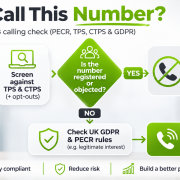
The ICO is explicit: you need to screen against both the CTPS and TPS registers, as well as your own do not call list. A sole trader or a standard English partnership is an individual subscriber, so a B2B list full of small firms will contain TPS numbers as well as CTPS ones.

Do You Need Consent to Cold Call a Business?

No. Consent is not required for live marketing calls unless the number is on the TPS or CTPS, and even then a person or business can consent to receive your calls. The key point is that a TPS or CTPS registration is a general objection, so a registered number is off limits unless you hold valid, specific consent from that subscriber. Automated or pre-recorded marketing calls are different and need prior specific consent, so they are not part of a standard telemarketing campaign.

Can You Use Legitimate Interests for B2B Cold Calling?

Often, yes. The ICO says that where PECR does not require consent, legitimate interests is in many cases likely to be the appropriate lawful basis, though it stresses there is no absolute rule. You must pass the three-part test: a genuine purpose, a need to process the data for it, and a balance in which the individual’s rights do not override your interest. Document that assessment before the first call.

Two practical consequences follow. First, if you hold a named person’s number, you must give privacy information and respect the right to object. The ICO describes the right to object to direct marketing as absolute, so when someone says stop, you stop and record it. Second, a business as such does not have UK GDPR rights, but PECR still requires you to honour its CTPS registration and any objection it has made. You cannot call a number belonging to a business that has previously objected to your calls.

What Must You Do on the Call Itself?

The ICO sets out four duties for live marketing calls:

  • Say who is calling, for example the name of your organisation.
  • Do not withhold your number, and display your number or a valid alternative contact number.
  • Give your organisation’s contact details or a Freephone number if asked.
  • Stop when asked, and never call that number again for marketing.

What Are the Penalties for Breaking the Rules?

Penalties have risen sharply. Under the Data (Use and Access) Act 2025, the maximum fine for PECR breaches moved from £500,000 to £17.5 million or 4% of global annual turnover, in line with UK GDPR levels. Clifford Chance reports these changes as taking effect on 5 February 2026. Law firm commentary also records that the government considered extending PECR’s consent requirements to B2B marketing but did not implement that proposal, so B2B calling remains an opt-out model rather than opt-in.

The ICO has said the live calls guidance is under review following the Act, so treat any single published figure or rule as a snapshot and check the ICO site before each campaign.

How Often Should You Screen Your Data Against the TPS and CTPS?

The ICO requires you to check numbers against the registers before you make the calls, but its pages do not set a re-screening interval. Because registrations take 28 days to take effect, many UK data providers apply a 28 day maximum screening interval as good practice. That figure is an industry convention, not a statutory limit. Our advice is simple: screen immediately before a campaign starts, log the screening date, and re-screen any list that has sat unused for a month or more.

Screening only works on accurate records. A disconnected or wrongly attributed number means a wrong screening result, which is why we pair compliance checks with B2B data cleansing and our GDPR data service.

Pre-Campaign B2B Cold Calling Compliance Checklist

  1. Record your lawful basis. Complete and file a legitimate interests assessment.
  2. Document data provenance. Know where each number came from and when it was collected.
  3. Clean the list. Remove duplicates, dead numbers and anyone who has previously objected.
  4. Screen against both registers. Check the TPS and the CTPS, plus your own do not call list.
  5. Log the screening date. Keep an audit trail for every campaign.
  6. Brief callers. Name the organisation, show a real number and offer contact details on request.
  7. Capture objections immediately. Suppress the number the same day and keep the record.
  8. Publish privacy information. Make it easy for named contacts to see how their data is used.

What Does Compliant Cold Calling Look Like in Practice?

Compliant calling is mostly process. A good agency agrees the target audience and lawful basis with you, builds and cleans the list, screens it, trains callers to qualify politely and exit gracefully, and keeps a suppression list that survives from campaign to campaign. Done well, compliance also improves results: screened, accurate lists mean fewer wasted dials and fewer complaints.

How Prospect Solutions Can Help

Prospect Solutions is an ICO registered B2B telemarketing specialist. We screen data against the TPS and CTPS, run campaigns against your agreed qualification criteria, and hand over only conversations your sales team wants. Explore our B2B appointment setting service and B2B lead generation service, or talk to our team about a compliant outbound programme for your market.

Frequently Asked Questions

Is B2B cold calling legal in the UK?

Yes. You do not need prior consent to phone a business, but you must screen against the TPS and CTPS, honour objections, identify yourself and show your number.

Do I need to check the CTPS before cold calling a limited company?

Yes. The CTPS covers corporate subscribers such as limited companies. The ICO says to screen against both the CTPS and the TPS.

Can I cold call sole traders?

Yes, but sole traders are treated as individual subscribers, so you must check their numbers against the TPS before calling.

Is cold calling covered by GDPR?

Where you hold a named individual’s details, UK GDPR applies alongside PECR. Most B2B callers rely on legitimate interests and must honour the right to object.

How long does a TPS or CTPS registration take to work?

A number must be on the register for 28 days before the registration takes effect, and registering a number is free, according to the ICO.

What is the maximum fine for breaching PECR?

Up to £17.5 million or 4% of global annual turnover under the Data (Use and Access) Act 2025, up from £500,000 previously.

Can I call a business that has asked me to stop?

No. The ICO says you cannot call the number of a business that has previously objected to your calls.

MQL vs SQL vs SQO: What Actually Counts as a Qualified B2B Lead? (UK 2026 Guide)

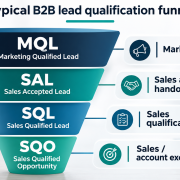
An MQL (marketing qualified lead) is a contact whose behaviour and profile suggest they could buy. An SQL (sales qualified lead) is a lead that a salesperson has spoken to and agreed is worth pursuing. An SQO (sales qualified opportunity) is an SQL that has passed a formal discovery conversation and is now a forecastable deal in your CRM. Each label marks a different handover, and most pipeline arguments between sales and marketing come from teams using the same word for different things.

What Is the Difference Between an MQL, an SQL and an SQO?

An MQL is a contact who has engaged with your marketing and matches your ideal customer profile (ICP), but has not yet spoken to sales. An SQL is a prospect that sales, usually an SDR or appointment setter, has vetted through two-way conversation and confirmed as worth active pursuit. An SQO is an SQL that has cleared a standard qualification gate in discovery and become an active, forecastable opportunity.

StageWho decidesEvidence requiredWhat happens next
MQLMarketing (scoring rules)Engagement plus ICP fit, for example a director-level title and a pricing page visitPassed to sales or an SDR/telemarketing team for a call
SAL (optional)SalesSales has reviewed the MQL and agreed to work itOutreach begins
SQLSales, by speaking to the leadTwo-way conversation, confirmed need and ICP fitMeeting booked with an account executive
SQOAccount executive, after discoveryICP fit, pain, budget, decision-maker engaged, next step scheduledOpportunity created in CRM and forecast

What Is a Marketing Qualified Lead (MQL)?

A marketing qualified lead is a contact who has shown enough interest and fit to justify a sales conversation. The signals are usually a blend of who they are (job title, company size, sector) and what they have done (downloaded a guide, attended a webinar, visited a pricing page). A typical scoring model might add points for a director-level title, webinar attendance and a pricing page visit.

The weakness of MQLs is that they measure interest, not readiness. Someone who downloads a white paper may be a student, a competitor or a buyer 18 months from a decision. That is why an MQL should never be reported to the board as a sales lead.

What Is a Sales Qualified Lead (SQL)?

A sales qualified lead is a lead a salesperson has actually spoken to and agreed is worth pursuing. The important word is spoken. An SQL is created by a conversation, not a score. Some teams add a middle step, the sales accepted lead (SAL), where sales formally accepts an MQL before any outreach, but many UK B2B teams skip it and move straight from MQL to a call.

This is the stage where phone-based qualification earns its keep. A trained caller can confirm in a few minutes whether there is a genuine need, whether the person holds budget or influence, and whether the timing is realistic. That is the core of what we do in our B2B appointment setting service, and it is why the SQL definition should be agreed with your telemarketing partner before the first call is made.

What Is a Sales Qualified Opportunity (SQO)?

A sales qualified opportunity is an SQL that an account executive has taken through discovery and confirmed against a fixed checklist. A common five-point test is: ICP fit, a real business pain, budget, a decision-maker engaged, and a scheduled next step. If any of the five is missing, the lead stays an SQL.

The SQO is the first stage you can sensibly forecast. Revenue forecasts built on MQLs or even SQLs will swing wildly, because too many of them never become real deals.

Why Do the Definitions Matter So Much?

Because the same word means different things in different companies. Public benchmarks illustrate the problem: one agency analysis notes that two companies in the same vertical can report conversion rates of 13% and 42% from MQL to SQL, simply because they define the terms differently (Understory Agency, 2026). A team that counts any sales call as an SQL will look far healthier than one that requires a booked meeting, yet generate the same revenue.

If you outsource lead generation, a vague definition is expensive. An agency paid per “qualified lead” will naturally lean toward the loosest reading.

What Are Typical MQL to SQL to SQO Conversion Rates?

Benchmarks vary widely by sector, source and definition, so treat any figure as a sense-check rather than a target. The most cited public dataset comes from First Page Sage, which reports an average B2B SaaS MQL to SQL rate of 13% (client data, 2019 to 2025) and an SQL to closed-won rate of around 12% (February 2025), both as reported by Understory Agency. Its sector table, as reproduced by Prospeo, puts cybersecurity at 15%, fintech at 11% and engineering at 11%.

StepCommonly quoted rangeSource and caveat
MQL to SQLAbout 13% average for B2B SaaS; 11% to 15% for tech-adjacent sectorsFirst Page Sage, 2019 to 2025 client data
MQL to SQL (vendor rule of thumb)20% to 40%Callbox comparison table, no source named
SQL to SQO (inbound)30% to 50%Callbox, no source named
SQO to closed-won15% to 30%Callbox, no source named
SQL to closed-wonAround 12% for B2B SaaSFirst Page Sage, February 2025

Notice the gap between the 13% dataset average and the 20% to 40% vendor range. Neither is wrong; they measure different things. The honest takeaway is to benchmark against your own history first, and to use published figures only to spot a stage that looks unusually weak.

How Fast Should You Follow Up an MQL?

As fast as you can. Harvard Business Review research from 2011, covering 1.25 million leads, found that firms that tried to contact a lead within an hour were nearly seven times as likely to reach a key decision-maker as firms that waited a further hour, and more than 60 times as likely as those that waited 24 hours or more. The research covered US companies, but the principle holds in the UK: interest decays quickly, and a lead that is warm today is a cold call next week.

How Do You Agree What Counts as Qualified?

Write it down, in plain language, and get sales, marketing and any outsourced team to sign it off. A workable process looks like this:

  1. Define the ICP. Sector, company size, geography, job titles and the problem you solve.
  2. Set the MQL threshold. Which behaviours and attributes trigger a handover, and what happens to leads that fall short.
  3. Set the SQL standard. The minimum a caller must confirm: need, authority, timing and a willingness to meet. Decide whether a booked meeting is required.
  4. Set the SQO gate. The checklist an account executive completes in discovery before an opportunity is created.
  5. Agree service levels. How quickly each handover must be actioned, and what feedback sales owes back on rejected leads.
  6. Review monthly. Look at the stage-to-stage conversion and adjust the definitions, not the reporting.

Clean contact data underpins every stage, because a score or a call is only as good as the record behind it.

Which Channels Produce SQLs Rather Than Just MQLs?

Channels that involve a live conversation tend to create SQLs faster, because the qualification happens during the contact itself. Phone is the clearest example: a trained caller can move a target account from unknown to SQL in a single call. LinkedIn and email usually generate replies that still need a conversation to qualify.

Common Mistakes When Using MQL, SQL and SQO

  • Counting MQLs as pipeline. They are marketing activity, not sales opportunities.
  • Letting the agency define “qualified”. Always supply your own written criteria.
  • Skipping feedback. If sales never explains why a lead was rejected, the scoring never improves.
  • Measuring volume instead of conversion. Fifty weak SQLs are worth less than ten leads that become SQOs.
  • Creating opportunities too early. An inflated SQO count ruins forecast accuracy.

How Prospect Solutions Can Help

Prospect Solutions is an ICO registered B2B telemarketing specialist. We agree your SQL definition up front, qualify prospects by phone against it, and hand over only the conversations your sales team would actually want to take. Explore our appointment setting service and B2B lead generation service, or talk to our team about defining and delivering qualified leads for your market.

Frequently Asked Questions

What is the difference between an MQL and an SQL?

An MQL is qualified by marketing based on engagement and fit. An SQL is qualified by sales through a direct conversation. The SQL is the first stage at which a human has confirmed genuine interest.

What is an SQO in sales?

An SQO is a sales qualified opportunity: an SQL that has passed a formal discovery stage and become an active, forecastable deal in the CRM.

Is an SQL the same as an opportunity?

No. An SQL is a qualified lead. An opportunity (SQO) is created only after discovery confirms fit, pain, budget, authority and a next step.

What is a good MQL to SQL conversion rate?

The most cited public average is about 13% for B2B SaaS, according to First Page Sage data, though vendors quote 20% to 40%. Your own historical rate is the better benchmark.

What is a SAL?

A sales accepted lead is an MQL that sales has reviewed and agreed to work. It is an optional step between MQL and SQL.

Who should qualify leads, marketing or sales?

Marketing qualifies MQLs by scoring. Sales, or a specialist telemarketing team acting for sales, qualifies SQLs by conversation. Account executives qualify SQOs in discovery.